
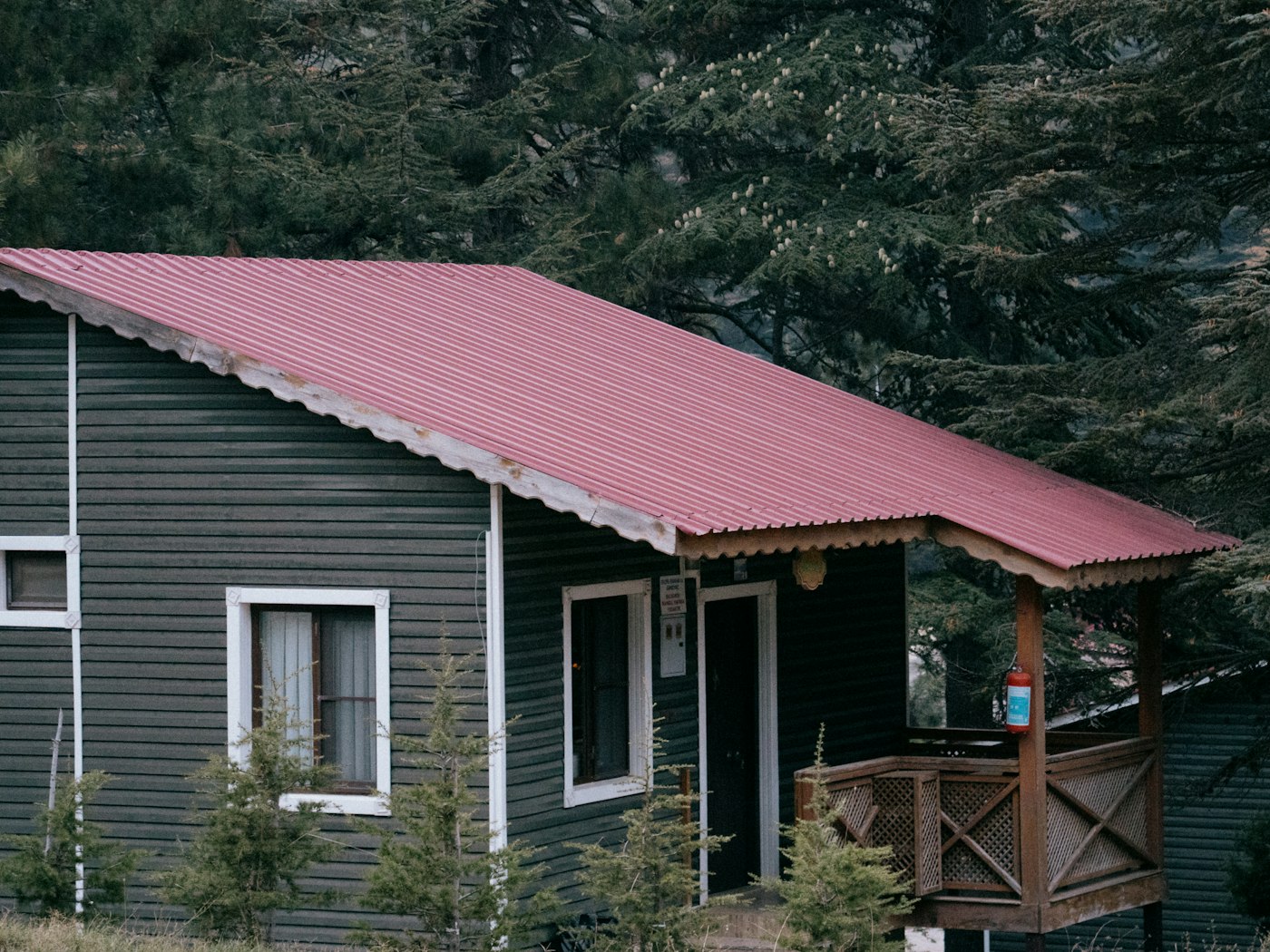
Snow guards are small devices or rails fixed to a roof that hold snow in place so it melts or slides off gradually instead of falling all at once. On a metal roof in the Laurentides, where a single storm can drop 30 cm or more of heavy snow, they protect people, cars, decks, gutters and entrances from dangerous avalanches. If your metal roof sits above a door, a walkway, a parking spot or a lower roof, snow guards are usually worth installing.
Quick answer
- Purpose: prevent sudden snow and ice slides from slippery metal roofs.
- Main types: individual pad guards, pipe or bar rail systems, and clamp-on systems for standing-seam roofs.
- Best for: roofs above doors, walkways, driveways, decks, hot tubs and lower roofs.
- Key rule: the layout must be calculated for roof length, slope and local snow load, not guessed.
- Install: ideally when the roof is installed, by a licensed roofer, on a dry day outside winter.
Why metal roofs shed snow so suddenly
Metal is one of the most popular roofing materials for chalets and rural houses in the Laurentides because it lasts long and sheds snow well. That last advantage is also its risk. Snow sits on a smooth, low-friction surface. When the sun warms the panels or the attic leaks heat, a thin layer of water forms underneath, and the whole snowpack can let go in seconds.
A sliding mass of wet snow and ice can weigh several hundred kilograms per metre of eave. It can injure someone, crush a car, tear off gutters, break railings and damage lower roofs. For a broader comparison of materials, see our guide on asphalt shingles vs metal roofing for Quebec winters.
The main types of snow guards
| Type | How it works | Best suited for | Points to watch |
|---|---|---|---|
| Individual pad guards | Small plastic or metal stops spread in a staggered pattern | Moderate slopes, exposed-fastener metal panels | Many units required; fasteners must be properly sealed |
| Pipe or bar rail systems | One or two continuous rails supported by brackets | Long slopes, heavy snow areas, high-traffic zones | More visible; brackets must be anchored into structure |
| Clamp-on standing-seam systems | Clamps grip the seams without piercing the panels | Standing-seam metal roofs | Clamps must match the seam profile and be torqued correctly |
| Fence or plate systems | Continuous plate or fence along the eave | Commercial or very steep roofs | Higher cost; can trap ice if poorly drained |
Where snow guards are most useful
- Above main entrances, side doors and garage doors.
- Above walkways, stairs and decks, including hot tub areas on chalets.
- Over driveways and parking spots.
- Above a lower roof, porch or shed that could be damaged by impact.
- Where gutters, vents, chimneys or solar panels could be torn off by sliding snow.
- On roofs near a property line, where falling snow could reach a neighbour’s land.
On a remote cabin with nothing but snow under the eaves, some owners deliberately let the roof shed freely. That is a valid choice, as long as no one walks or parks below.
How many snow guards do you need?
The right number is not a matter of taste. It depends on roof slope, rafter length (the distance from eave to ridge), panel type and the design snow load for your location. The Laurentides have some of the higher ground snow loads in southern Québec, and they increase with elevation, so a chalet near Mont-Tremblant or Saint-Donat generally needs a stronger layout than a house in the lower valley.
Manufacturers publish layout tables or calculation tools based on these factors. As a rule of thumb used in the industry:
- the first row sits close to the eave, generally above the exterior wall line;
- longer slopes need additional rows higher up so the load is not concentrated at the bottom;
- steeper roofs carry more sliding force and need more guards per square metre;
- rail systems are often used on long, steep slopes because they spread the load.
Ask your roofer for a written layout based on the manufacturer’s calculation. A handful of decorative guards on a large roof can fail under load and create an even bigger slide.
Snow guards and roof structure
Snow guards keep snow on the roof, so the structure carries that load for longer. A sound roof designed for local snow loads can handle it, but an older chalet with undersized rafters may not. If you notice sagging, cracked drywall or doors that stick in winter, have the structure assessed before adding guards. Our guide on when and how to clear snow from a roof (in French) explains warning signs of excessive snow load.
Good attic insulation and ventilation also matter. A warm attic melts snow from below and feeds both slides and ice dams. See our roof and attic ventilation guide and our article on ice dams prevention.
Typical costs in 2026
Prices vary a lot with the system, the roof’s accessibility and the amount of work. As a general indication only, in 2026:
- individual pad guards are typically inexpensive per unit, but the total depends on how many your layout requires and the labour to install and seal them;
- rail and clamp-on systems usually cost more per linear foot, with installation often representing a large part of the bill;
- adding guards during a new metal roof installation is generally cheaper than retrofitting later, because the crew and equipment are already on site.
Ask for a quote that specifies the brand, the number of guards or the length of rail, the fastening method and the warranty. Our quote comparison checklist (in French) helps you compare offers line by line.
Installation: do it right, and do it safely
Snow guards must be anchored correctly. On exposed-fastener panels, screws go through the panel into the structure and must be sealed to prevent leaks. On standing-seam roofs, clamp-on systems avoid holes but need the right clamp for the seam profile. Adhesive-only guards are generally not recommended for heavy Laurentian snow.
Installing on a metal roof is dangerous: the surface is slippery even when dry. Roofing work above 3 metres requires fall protection under Québec occupational safety rules enforced by the CNESST. Hire a contractor with a valid licence from the Régie du bâtiment du Québec and avoid working on a snowy or icy roof yourself.
Maintenance through the winter
- After big storms, check that the snow is held evenly and that no guard is bent or missing.
- Watch for ice building up behind rails; it can indicate a heat loss problem in the attic.
- In spring, inspect fasteners, sealant and the panels around each guard.
- Keep gutters and downspouts clear so meltwater drains away; see our gutter guide (in French).
Frequently asked questions
Are snow guards mandatory in Quebec?
There is no general provincial rule requiring snow guards on houses. Some municipalities regulate snow falling onto sidewalks or neighbouring properties, and owners remain responsible for damage caused by snow falling from their roof. Check your local by-laws.
Can I install snow guards on an existing metal roof?
Yes. Retrofitting is common, especially with clamp-on systems on standing-seam roofs. The roofer must confirm the panel type and the structure.
Do snow guards cause ice dams?
Not by themselves. Ice dams form when heat escapes from the attic. Snow guards can make an existing heat-loss problem more visible, so fix insulation and ventilation first.
Are snow guards useful on asphalt shingle roofs?
Rarely. Shingles have a rough surface that holds snow naturally. Snow guards are mainly designed for metal and other smooth roofs.
When is the best time to install them?
Ideally during the metal roof installation, or on a dry day between spring and fall. Avoid winter installation.
Conclusion
Snow guards are a modest investment that turns a metal roof from a winter hazard into a predictable, safe roof. Choose a system that matches your panel type, insist on a calculated layout, and have it installed by a licensed roofer. Planning a new metal roof or a retrofit? Request free roofing quotes from contractors who work in the Laurentides. Heading north for a ski weekend? Find ideas on The Laurentides regional guide.
Leave a Reply